Interview: Saara on R&B Music and Turning Grief Into Good Art
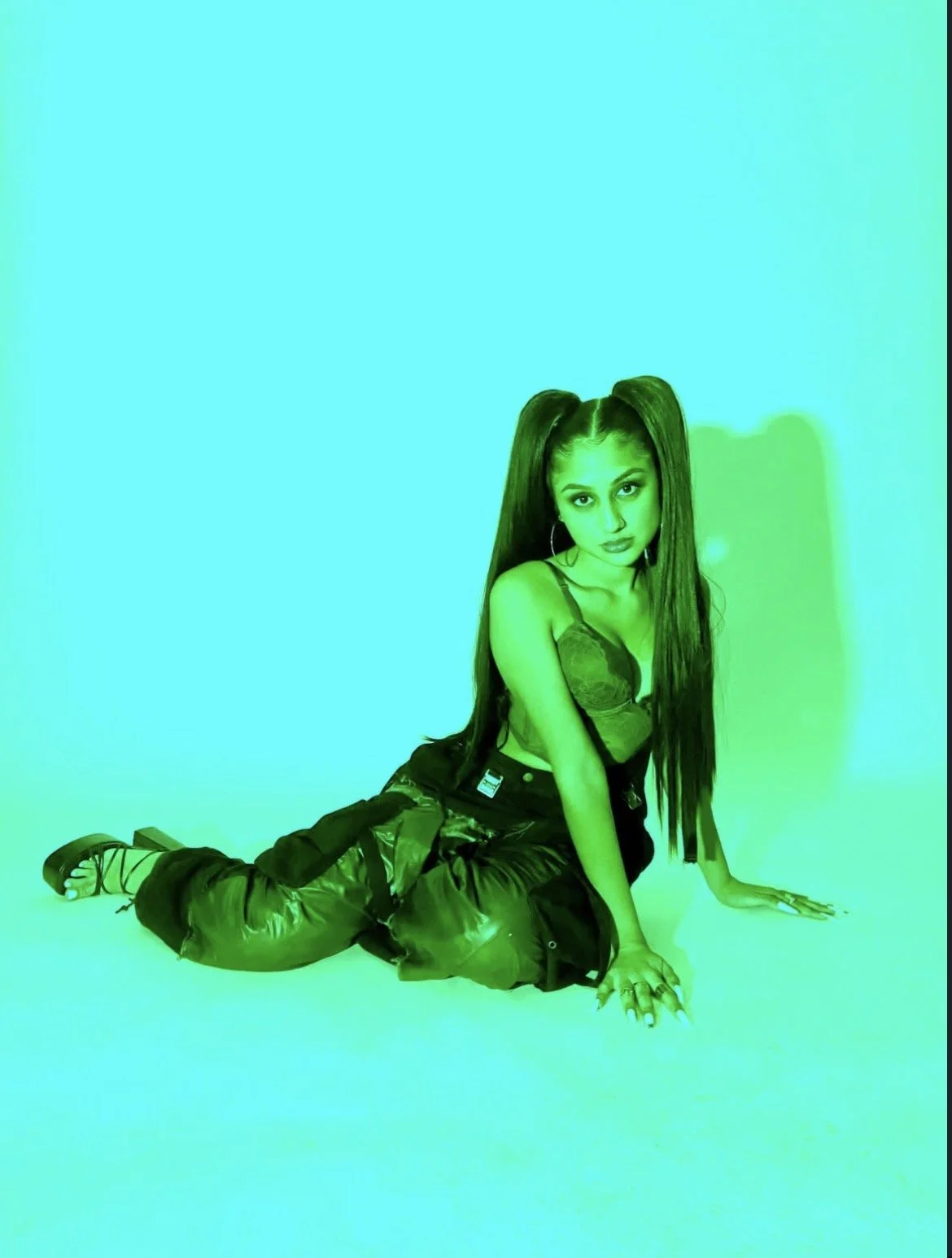
Photo Credit: Roslyn Mosses
Interview by Tara Saraf
It’s a real treat for me to stumble upon a song that makes me want to know more about its singer; this happened to me with “Serato” by Saara. Its unfiltered lyricism and smooth R&B groove hooked me in. The titular DJ software is not a good enough excuse for this person to not find a job or justify their unfaithful actions, as she quips in the song. For Saara, a twenty-seven year old R&B artist hailing from Las Vegas and Los Angeles, music was never a decision. It’s something she’s fallen into and felt aligned with from a young age, having been gifted a keyboard at age six from her brother, joining choir, and doing open-mics in school just to hold a microphone in between her hands. In my interview with her, we discussed her forthcoming EP, the freedom and fluidity within R&B music, and putting an empowering spin on a painful experience.
I saw clips of a recent live show that you did and I noticed that your persona on stage really shines through. Considering your songwriting, would you consider yourself to be the same offstage or do you find the courage to be confrontational through music itself?
Oh, that’s a great question. Music definitely does empower me. It’s not necessarily that I’m not myself when I step onto a stage, but there is some type of adrenaline and confidence boost that comes with it that allows me to step into a more emboldened version of myself. I think the more brave I get in my music, and in the things that I’m writing and saying, and the ways that I’m showing up on stage, I’m almost learning from myself in a way. I’ll pull from that confidence when I need to, and then as I get more confident and less filtered in what I’m writing, it kind of trickles over into my real life. It’s almost like, my own internal ecosystem with a bunch of selves like that SpongeBob episode where there’s like 50,000 of him in his brain. But positive and not like everything’s on fire. I mean, sometimes it’s like that, but you know what I mean.
“You might realize that you know where home is
But I got the door locked on you,
Call your uber, kiss that b*tch goodnight” - Lyrics from “Out My Mind” by Saara
Would you consider yourself to be solely R&B/soul or more comfortable with no labels?
I would definitely say that I am an R&B artist, and I’d argue the label is very, very important because I am a non-Black artist in the R&B space. So I think it’s very important for me to make it clear that, hey, what I’m making is R&B and R&B is a Black genre, so all credit needs to go exactly where it’s due. That history needs to be acknowledged and celebrated. The most that I’ll ever be is a guest in this space, but I’m deeply grateful for that. You know what I mean? Just to be able to have the privilege to participate. I’ve never connected to a genre more than I’ve connected emotionally with R&B, and I just want to make sure that I’m staying as respectful as I can in this space and remaining forever a student. I think the words and the language that we use is very, very important. So I would definitely say R&B.
It’s such a versatile genre. It can be like, sexy, it can be sad, it can be happy, it can be, like, so many different things.
Totally.
Who do you look up to in the industry and who inspires you?
Ooh, I could write a book. I'm gonna have to say, the first answer off the top of my head is SZA down because of her conversational lyricism. She is so good at having that effect of just feeling like you're on the phone with her and she's venting to you or you're reading straight out of her journal. And it is like my goal as an artist to get there and for that to come as easy to me as it comes to her and put it on a page.
So I know you're a Vegas local, right? So, has that scene, like, impacted your sound or your worldview at all?
If anything, Vegas is pretty diverse. Because obviously our foundation is tourism and the strip. So I think I’ve been blessed in that way to have been able to meet so many people from all different types and walks of life and learn from whatever conversations I’ve had with them, and relationships I’ve formed with them, and pull from that and just pull and pull and pull and put it into my art. So in that way I’d say my hometown has shaped my artistry. It’s given me a lot of perspective.
I know you're gonna release an EP in a few months. That's so exciting. What can you tell us about its potential themes or subject matter?
Okay, the subject matter is born very much from the story we started with “Serato.” We’re picking back up right from there, and we are diving into that story, because, I mean, essentially, you hear it in the song. I went through a crazy a*s breakup in 2025 and it was just the most disillusioning experience. I was forced to confront a completely different reality than the one I thought that I was sitting in. So my EP is called Sugar. I think we settled on 5 tracks, so nothing super crazy. I’ve just never put out a body of work before so I’m really excited. It’s executively produced by my best friend YD. She’s a phenomenal artist herself, whose music you should definitely get into, and she helped build me such a beautiful and cohesive sound for this one. It was mixed and mastered by my other incredibly accomplished and phenomenally talented best friend Sauce Miyagi. It was really just the three of us who created this thing together. I was crying every day in the studio, and was really just trying to process everything that was happening in real time, and I was like, I want to make something out of this heartache. And then we just sat in the studio every night for like a month, two months, something, and then I would just write with them and I would cry and we would talk about it and I would cry some more and we’d lay stuff down. And then before I knew it we had this EP that I’m so excited is finally [in its] finishing stages. It’s just a rollercoaster of me working through my grief and there’s anger and there’s humor and there’s optimism and all kinds of fun stuff.
“I do hope that there's a feeling of empowerment that I'm able to instill in anybody who's listening to my music.” - Saara
After listening to Saara, what do you hope people take away?
I think just a feeling of being very empowered to be honest about how you feel, no matter what that looks like. There’s this argument I f*cking hate where people say it matters from an energetic standpoint what you listen to and that you become whatever emotion or story that you listen to, and that like, if you listen to a bunch of SZA you’re just going to be like, insecure and sh*t. I hate that. SZA is one of the most successful women on planet earth. And to reduce her, and then yourself, to a moment in time where she, or you, are experiencing grief and being human, is so silly to me. I think about that sometimes because a lot of the music that I make, I’m not writing it in my best moments or my most powerful moments. But I’m being honest about how I feel. Music, if anything, is like a snapshot of the experience. It’s rarely, if ever, the main conclusion or final statement.
I don't like that argument either because, to be honest, I don't listen to a lot of sad music. I listen to like a lot of hyper pop, reggaeton, like music that really hypes you up, but like, I'm still sad as f*ck.
Yeah. So, like, the complete inverse. It doesn’t really matter because it’s just a moment in time and there’s so much more to the story than just that, you know? With that being said, I just hope that people feel empowered to be very honest about wherever they’re at, whether it’s great or maybe not the best…just embrace whatever their own truth and their own reality is. Something very important to me that I hope translates in my music is that it doesn’t really, I mean, it does matter what happens to you, but you can always take it and you can make something beautiful out of it. And I think that’s what any musician is trying to do. And that sentiment is very, very important to me because I’ve been through a lot of bullshit, and music is how I personally work my way through it and take my power back. If you’re a cheating a*shole, but I can find a way to make it pretty when I call you a cheating a*shole, I got something out of it. That’s kind of the takeaway that I would hope for. You get the final say in your own story, because it’s yours.
STAY UPDATED WITH SAARA!