Film Review: “Resident Evil” (2026): The impact of change.
Article by Karlee Lyons
Credit: Sony Pictures
‘Resident Evil’ is back and more fun than ever!
Exit: The Milla Jovovich movies of the 2000s.
Enter: One of the more recent big comedy turned horror directors in Hollywood , Zach Cregger.
Cregger made his mark on me with the 2024 film ‘Weapons’ and with him stepping up to adapt the classic Resident Evil video game franchise, I'm happy to say that what he delivers is so much more than just a video game adaptation.
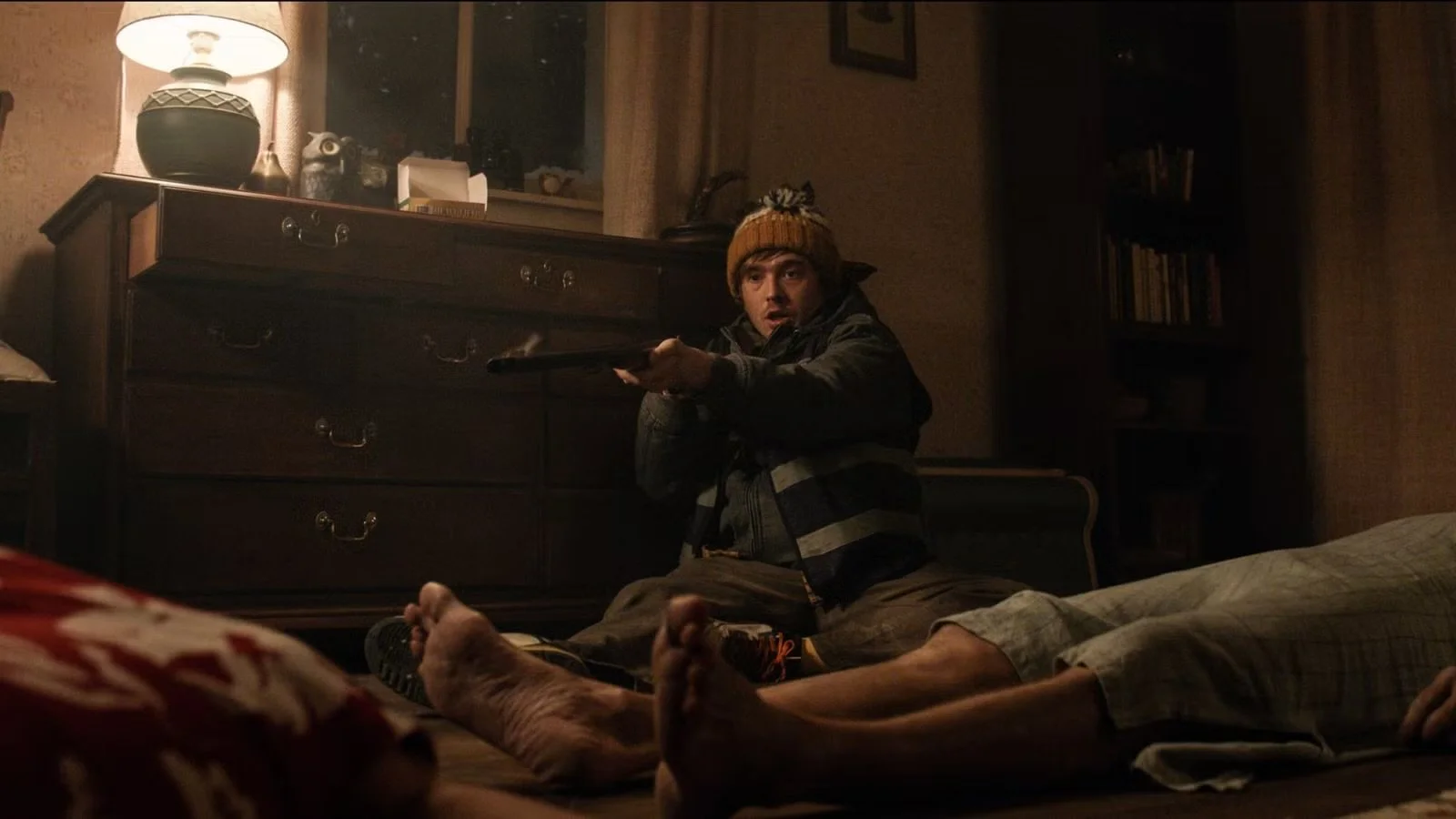
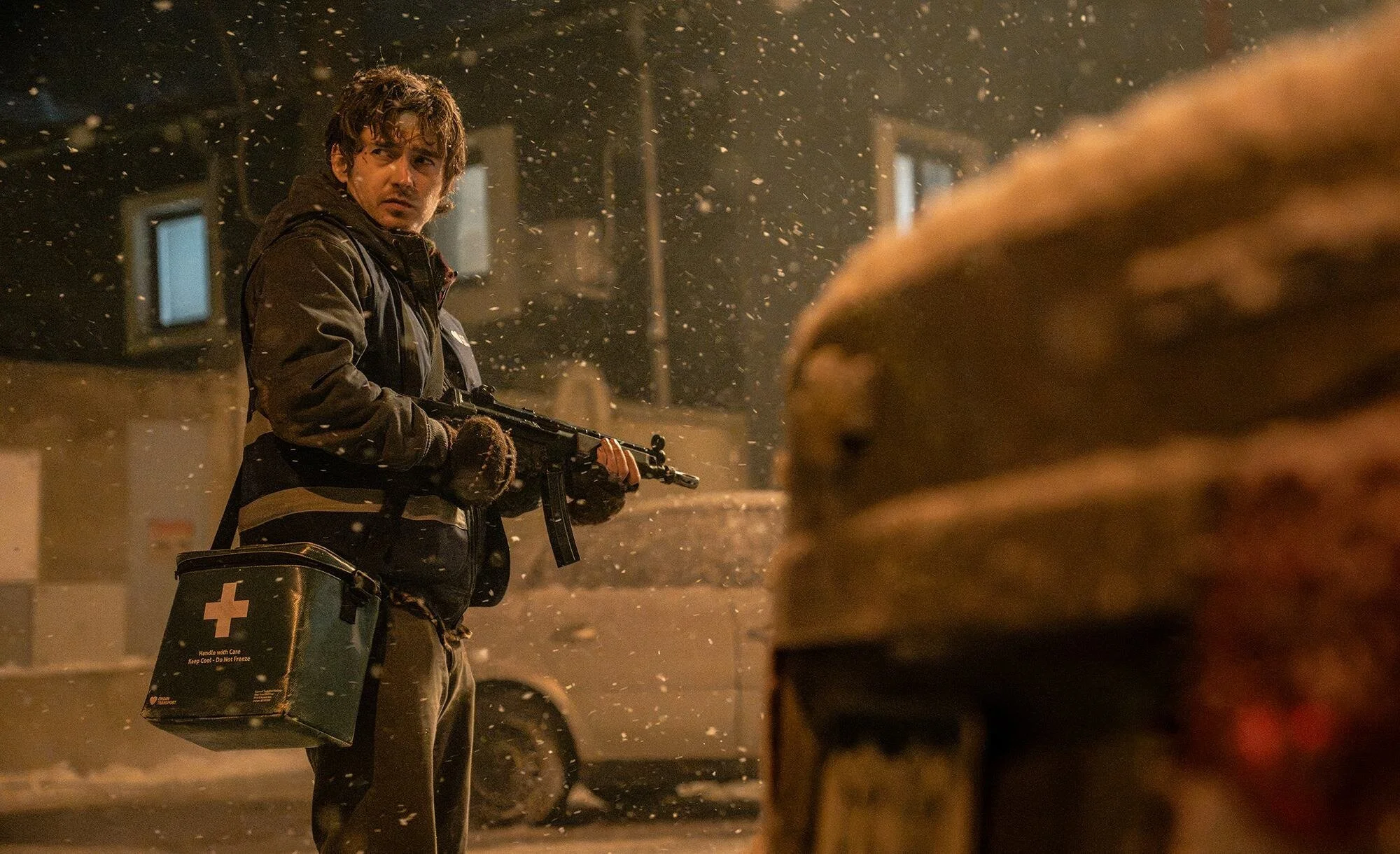
A wildly good time and the most recent addition to the ‘I accidentally became important at work and it’s ruining my life’ subgenre, ‘Resident Evil’ follows Austin Abrams reteaming with Cregger to play a charming medical courier named Bryan who's tasked with delivering what he believes to be a life-saving organ to Racoon City general hospital. We follow him from point A to point B in a brisk 90-minute gauntlet run facing unknown evils.
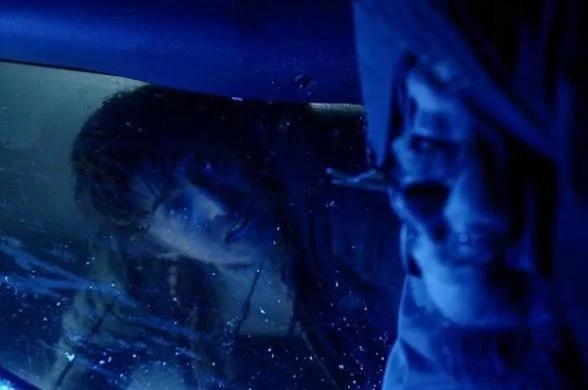
With Cregger’s new take on the property comes change and part of that change was a switch in perspective. In previous Resident Evil stories, we have always followed someone who is at least a little prepared for what's ahead. Whether it's police training or just their upbringing, our main character is always capable, but not this time. Bryan isn't our typical Resident Evil protagonist, he really isn't a Resident Evil protagonist at all, not in the typical sense at least. Yes, he's this film's protagonist, but he's more like a NPC that would leave a note for our protagonist to find in a Resident Evil game. A self-described “glorified post mates driver”. Bryan struggles his way through guns and padlocks in a viewing experience that gave me flashbacks to my experience with the games. I think in giving us a new type of protagonist, Cregger provides a fresh perspective rather than an oversaturated character archetype, that of the badass, smooth-talking action hero. And with Cregger's approach prioritizing the feeling of playing a video game over adapting a specific story from the games, this change in perspective fits the bill. He makes the character relatable to the audience through this unpreparedness. As much as everyone would like to think they'd be Leon when faced with this situation, we all know we'd be Bryan. He uses over the shoulder shots as if we were following the character we’re playing. It's a choreographed dance between Abrams and the camera operator and they know the steps perfectly. He also employs first-person shooting shots that put a smile on my face each time they happen. The POV shot of Bryan shooting the woman outside the cop car took me back to the gas station in my first playthrough of RE 2. It's that feeling of killing a zombie when you're still new to the world. You know something's just gone down, but you're not quite sure what exactly. You have a piece, but not the full puzzle. This movie builds the feeling of strange new surroundings perfectly through not only the protagonist and camera work but the look of the settings as well.
Credit: Sony Pictures
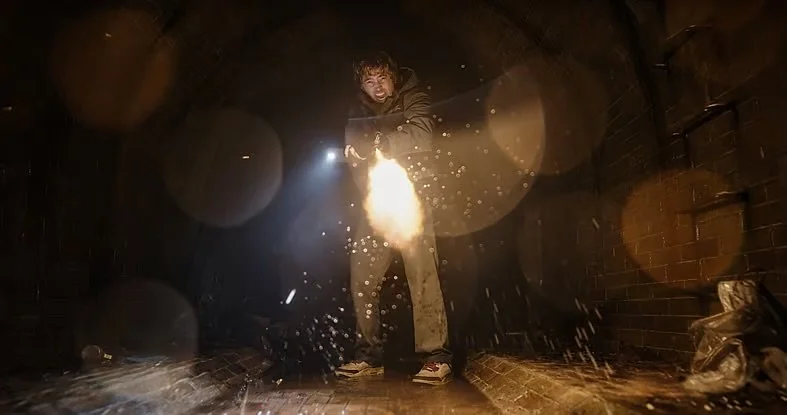
The desolate snowy landscape leading into Racoon City builds the perfect atmosphere for a survival horror story. The settings change as we progress like levels of a game. We go from snowy roads, dimly lit by break lights, the red is shading the white beautifully. To dark tunnels and sewers lit via Bryan's iPhone flashlight. Then finally to a place where all Resident Evil stories must end; a blinding white fluorescent laboratory.
Cregger's horror plays in the dark, and it works wonders when you are stranded in the horror of it all. We're thrown into the deep end along with Bryan.
It's the combination of the camera work and the setting that builds a perfect world for Austin to perform in, and his performance is easily the highlight. This film has a limited cast. Most of the time it's only Abrams onscreen, so naturally the heavy lifting is left to him. He makes Bryan's questionable decisions work for me simply by being likable. If Bryan was an unlikable guy standing and watching horrors unfold rather than running, you wouldn't be watching this movie. If you're going to be dumb, at least be likeable. Austin's pure panicked acting makes Bryan's reactions more endearing and forgivable rather than straight up unbearable. The constant slew of cursing and the panicked yelling provides great contrast from the terror throughout with its comedy. If you took a shot for every F-bomb you'd be passed out long before the title card drops. So sure, you're yelling at the screen for him to get up and run, but it's because you care. All that to say, Abrams plays Bryan with incredible charisma.
All characters are driven by something and for Bryan, its compassion. His care for others is what got him going to Raccoon City in the first place. His kindness has him putting saving someone's life above his own safety. He powers through the ruined streets and the snow to make his delivery, not for himself but for a stranger, one we find out doesn't even exist as it's not actually an organ within the bag.
It's unfair to accredit all of his likeability to Abrams, as it's clear Zach Cregger and Shay Hatton put in the work in the writers’ room as well. Bryan is written to be “a little bit of a boy trying to be a man” . We start this movie with his phone call, talking to his girlfriend Michelle about her being pregnant. He's a bit dismissive, but over the course of Bryan's trip we learn that it's not because he doesn't love her or doesn't want a kid with her. We see his compassion and parental instinct constantly through his actions in the film, such as helping the little girl he finds, the care he shows for the woman he hit and, not to mention his sheer determination to deliver the package to help someone. But instead it's because of a very human fear.
The fear of change.
This theme takes a very physical form within the movie. The main monster is an amalgamation of infected people that follows Bryan after the film's inciting incident.
I find it poignant that this monster starts with the unification of a husband and a wife. Much like having a baby binds two people together and permanently changes a person's life. This monster merges people and strips them of their identity.
This fear becomes fully realized for Bryan when he finds a little girl alone in an RV. Within all the chaos, Bryan stops to help her, and it's ultimately what leads to his downfall as she infects him.
His care for a child permanently changes him.
Credit: Sony Pictures
In the movie's emotional climax. The infected Bryan takes refuge in a parking garage as he's at his wits end.
As he contemplates, he sees a sticker on the back of a car. One of those cheesy stick figure family stickers. Something that you'd see on a minivan outside a suburban house and in thinking of family, he thinks of Michelle. Believing this is the end of the line, he leaves her a voice memo.
“It looks like there's a chance we might not get to talk again and that means we won't get to finish our conversation from earlier tonight, but I uhhh…I hate my response. I hate that my first reaction was just me being… afraid.. Of.. change… and of growing up. And, you know, the idea of having a baby means that all of that's coming whether I want it or not, but I do. I do want to have a kid with you. And I should have said that right away but… not because you wanted to hear it but because it's true and just.. Whatever you decide to do and whatever happens tonight, just… I think you would be an amazing mom.”
In Brian's lowest moment, we see him realize that change doesn't always have to be bad. Though it takes a physical change for the worse for him to realize this. Change is essential.
And it's this aspect of the story that makes it work on both an emotional level for the story and a meta level for the movie.
Credit: Sony Pictures
With this film came change; a new director bringing in a new character. Taking a new approach to adapting a game, ushering in a “new era of evil” as the marketing made clear. Change is not a thing to fear as it is essential for growth. Even when Bryan changes for the worst physically, he comes to essential realizations about what he wants in life. He grows.
And it's this switch up of the typical Resident Evil formula that allows Cregger's heartfelt filmmaking to shine. He provides a lesson for our main character and Resident Evil fans alike.
Change is essential for growth, and it was certainly essential for the success of this film.
Credit: Sony Pictures