Interview: Meet Sihie, an artist making Desi-pop for Baddies Everywhere
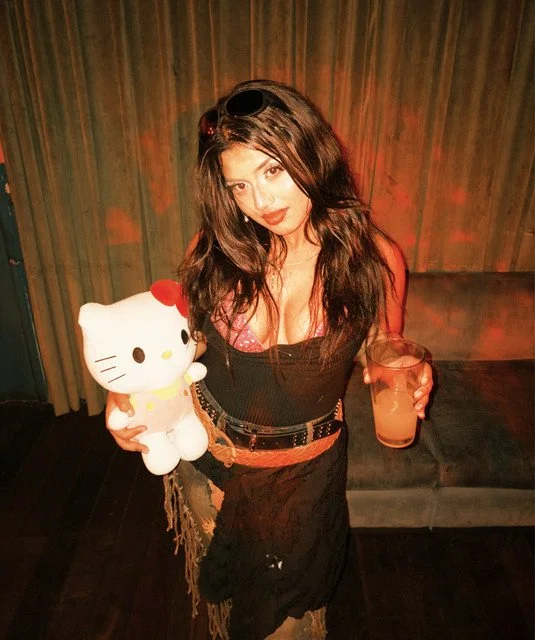
Courtesy of Sihie on Spotify
Interview by Tara Saraf
The very night I discovered Sihie, a Delhi-based artist, on Spotify, I knew I needed to pick her brain. The song “Pink Plastic Kiss”, a luscious pop track with lyrics in English, Hindi, and Punjabi, has won over a large audience in India and her latest work traverses genres like trap, drill, and indie pop. Our conversation went from discussing her songwriting process to wanting to empower brown girls to what the clubs are playing in India, and I’m excited for everyone to soak it in.
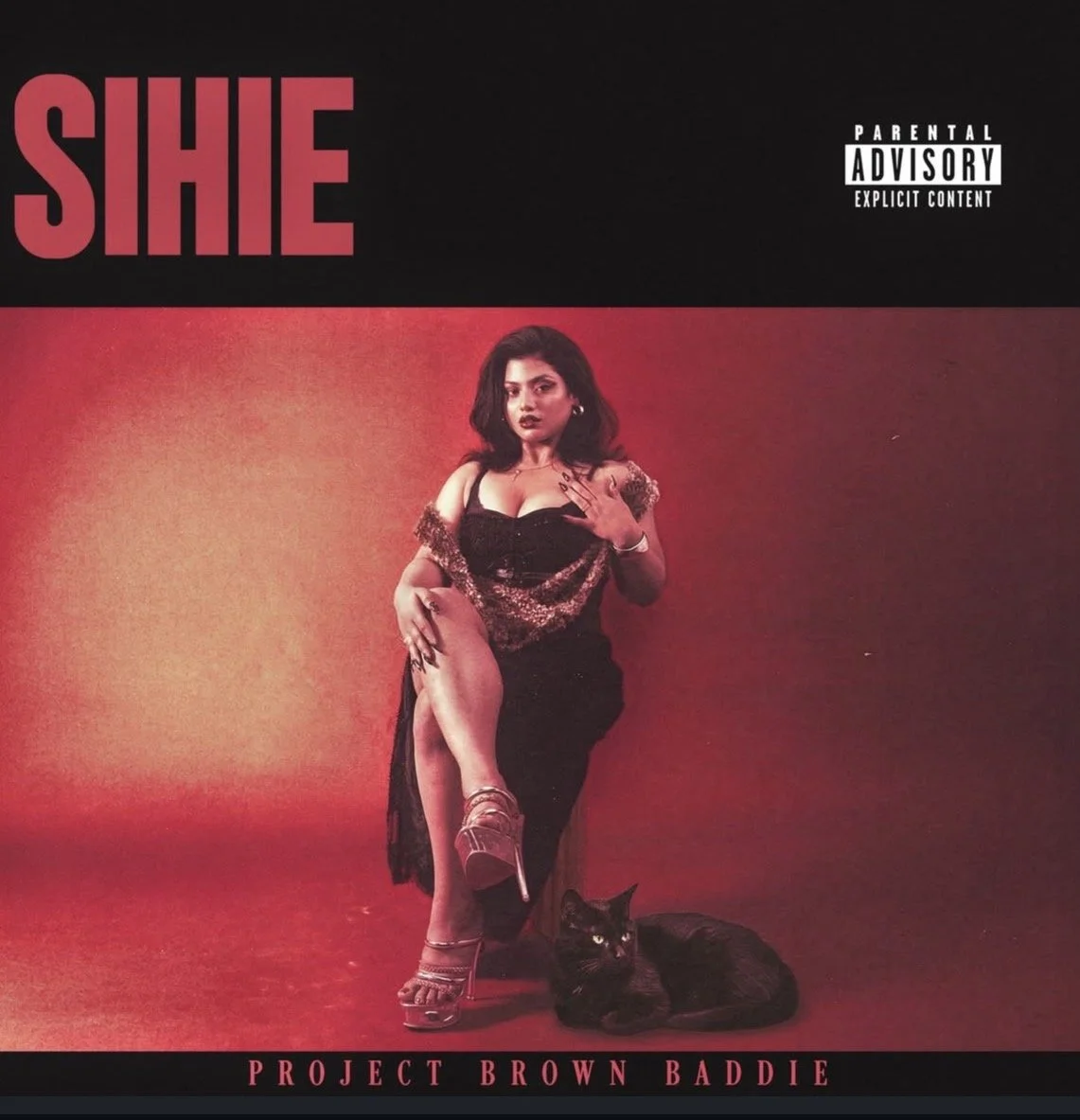
Your latest album, Project Brown Baddie, is genre-bending, lyrically catchy, and completely captures the spirit of a brown girl who’s in her bag. How did the idea for this project originate?
I made a song called “Brown Baddie,” I think, in December of 2024. I was like, “The single is flashy and good”, but I wanted it to be more than just a single. So, personally speaking, in my own life, I’ve been a fat kid. When I was a little girl, I was very confident, but somewhere along the way I lost that. Recently I gained that back again and I started feeling confident. I started realizing how much power you have when you are a baddie, and what being a baddie in India really means because it’s not that simple. You are brought up with certain things in your soul, in your mind, that go against you expressing yourself. You learn to unlearn all of those beliefs you learned as a kid. Then, you grow up and suddenly see life with a different lens, and I gained that. I was like, “Okay, I’m finally happy in my life, just for existing and being able to do this”, so I was like, “Let’s make an album, it’s time.”
Tell me about your creative process visually. The video for “Brown Baddie” is playful and seems to be rooted in Punjabi culture.
So I am a creative person, but I am not a very visual person. I go with a completely unrealistic idea to the director and then the director tells me, okay, this is something that we can do… you are insane, we can't do that. So then, we come to a middle ground. For “Brown Baddie”, what I wanted was, I was hoping for it to be more commercial, since in the lyrics itself, there are a lot of references and it's not very pop in the sense that the Indian audience is accustomed to, like they listen to Bollywood stuff. So it's not that accessible, but it's also not very artistic. It's just fun and it's just bold. I just wanted the video to kind of show a boldness in being feminine and, you know, being with your girls, but still kind of resonate with a local audience. Plus I had just decided that I'm going to move from Delhi to Chandigarh. So I was also like, let's do this, you know, let's get that culture in and I have my team and the director of it is also an artist. So he is not a proper video director. He's an artist himself. And he has directed all of his own music videos that I've really loved because he's a very visual artist. So I went to him and I was like, this is the song that I've made. And I'm not Punjabi, but the song has a lot of Punjabi in it. And this is the idea that I have, that a bunch of girls are going out and then they're f*cking up some guys. And then they go out and then they're just chilling. So that's something that I kind of want to portray. In a funny way. So he was like, okay, that's interesting. And then we did it and it was very fun.
Sihie, born and brought up in a small, remote village in Chhattisgarh, India, recently moved back to Chandigarh from Delhi. “It's much greener. It's much safer and the people here are lovely. They're so good. They're so peaceful and respectful. I love them.” She also played a show, her album’s listening party, there, and it was pretty unforgettable; there’s a mosh pit around her while she’s singing about a certain something of her lover’s that serves as medicine, or a dawa-daru to her.
“I was like, f*ck being sad, f*ck being confused, and I just used every ounce of confidence I had, and I put them into songs.” - Sihie
Sihie was studying history in Delhi, a diverse city that challenged her physically and mentally, before devoting more time to her music, which before Project Brown Baddie was more poetic— mainly about emotions like sadness or love— but quickly became more about identity. The title track “Brown Baddie” has a drill beat and her interest in this was inspired by Central Cee during his rise in the midst of COVID. She “had no intention of making an album right after playing that song, but was in this creative kind of flow state”. The original track was on a ASAP Rocky Memphis type beat and she was rapping over it, which the label she was with at the time disapproved of. They wanted her to keep pushing out girly-pop and not explore grittier sounds. They even advised her against making the album because she hadn’t “proved her name yet”. To both of us, that didn’t make any sense, and I told her I was so grateful she went ahead and did what she wanted to do regardless. Some of her inspirations include Rihanna and Doja Cat, artists she listens to while getting ready, and hopes to become a hype artist for brown girls who are growing up. As someone who used to feel ashamed of her South-Asian culture, artists like Sihie are actively mending and changing the way we view our identities since “the brown diaspora has gained interest in Indian culture and started owning it”.
“I believe that every eldest daughter would bump this. Yeah, because, we have to be perfect, and we want everything, and every ambitious woman, I feel like, would love it. At one point you realize that you don't need anybody. Like, obviously, you do. But you feel like you're unbeatable, or maybe you want to feel like that, and I feel like they would all really bump it.” - Sihie
I asked Sihie where she imagines her audience bumping the album, as her music brings to mind parties in shows like “Euphoria” and Netflix’s “Class”, which is set in Delhi. But apparently the clubs in India are filled with forty to fifty year old uncles jamming to techno and Bollywood. “I'm just trying to find an audience that would listen to original music and independent artists and maybe, we can go from there, get to clubs.”
“It would be very untrue to myself if English was not in my music”, she says after explaining how much Western culture is consumed in her daily life. That’s why it’s contradictory when people in the comments section allege she’s throwing around languages to get views or streams when she’s just being authentic to the way she converses. Sihie’s also faced backlash due to some risqué lyrics in songs like “DDD”, but in my opinion, manages to find a great balance between frisky and allusive.
“I think I'm playing my part in Indian society to kind of desensitize, at least [for] Gen Z, the fact that women can own their own sexuality and talk about sex, and it's nothing to be ashamed of.” - Sihie
With more Indian artists such as Lara Raj of Katseye and Hanumankind gaining global traction, I definitely see Sihie going down a similar route. “I’m the queen of Desi-pop yeh meri territory / I’m the queen of Desi-pop, this is my territory”, she says on “Pyaas.” We also talked about her using her Indian accent to her advantage in terms of adding more “punch” to lyrics and rhythms. It was an honor to speak with Sihie and learn the behind-the-scenes of her artistic processes.
Stream Project Brown Baddie here!
Courtesy of _Sihie on Instagram