TV Series Review: Euphoria Veered Off the Path in Its Third Season, Yet Reached Its Final Destination

Photo Credit: HBO MAX / Euphoria
Review by Bárbara Mtz
The HBO series Euphoria reached its end after last week’s eighth and final episode of the show’s over-the-edge, wild third season. Although many would consider the choices made for Season 3 irrelevant or misguided, the ending ultimately managed to tell the story it was always meant to tell.
While the first and second seasons focused on Rue’s battle with addiction, on-and-off toxic romances, and the high school lives of its characters — combined with illegal activities and their consequences — the third season completely set aside East Highland High School and jumped five years into the future. Even between Seasons 1 and 2, there were narrative inconsistencies, such as Kat’s character being reduced from a main role to a supporting one. However, the first two seasons at least remained grounded in the characters’ teenage years and coming-of-age journeys. Season 3, nonetheless, reshuffles the deck entirely, leaving characters such as Gia, Kat, Jules, Leslie (Rue’s mother), and Ethan with little to no storyline — or writing them out of the series altogether.
At the very least, Rue’s main unfinished business from Season 2 — her massive debt to drug dealer Laurie —becomes the core conflict of the new season, though it is taken to a much larger and riskier scale. Rather than focusing on relapses, rehabilitation, and addiction, Rue must navigate life working for drug cartels, with the U.S.-Mexico border serving as her primary setting. Nate’s abrupt breakup with Cassie near the end of Season 2 evolves into a nearly married, settled couple in the final season, with Maddy herself invited to their wedding.
Lexi, the observer who created a high school play based on the events of Euphoria, becomes a Hollywood production assistant. Her character arc, however, remains highly debatable. Despite transforming into a storyteller for a television series, many of her scenes revolve around criticizing Rue and her own sister, Cassie.
Cassie’s role is not only worth discussing and debating; it is also one of the most difficult to analyze beyond the surface. Because so much controversy surrounds her physicality and objectification, it can be challenging to illuminate the deeper, more human roots of her actions and decisions. Since Season 1, her sense of self-worth has been heavily tied to men and romantic relationships, and this dependency escalates further throughout the final season. Fortunately, through the financial crisis that even leads to Nate's death, she is able to reconnect with her former best friend, Maddy. Perhaps their friendship was always the true endgame—not the handsome, manipulative man they both loved (and whom Cassie ultimately married).
All in all, Euphoria may always be remembered for its turbulent and ever-shifting storytelling, which had largely abandoned its surreal, dreamlike neon aesthetic by the final season. The five-year leap into the future was a risky decision, yet it did not stop audiences from watching and debating the fate of characters who found themselves in a story that had evolved from a psychological teen drama into what looks like a crime thriller.
While the first seven episodes seemed to go off the rails one after another, the eighth and final episode ended with the person it was always meant to end with: Rue. More specifically, it ended with Rue confronting the consequences of her own journey, alongside a measure of vengeance delivered by Ali, the comforting father figure in her troubled world. In a story defined by drugs, addiction, and their consequences, few would expect a happy ending for Rue. And yet, for those who struggle the way she did, perhaps faith is all that remains.
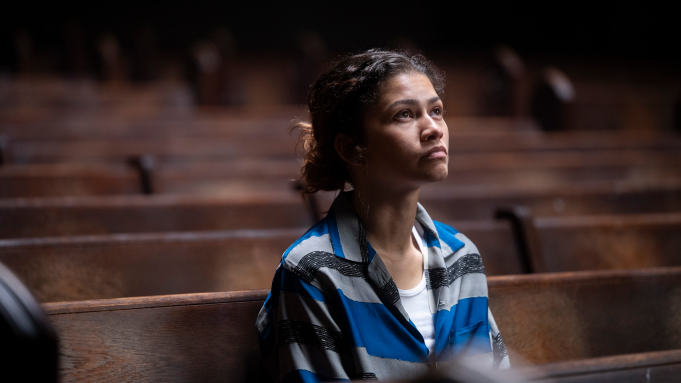
Photo Credit: HBO MAX / Euphoria